
December is a strange month for rental properties.
Nothing is on fire. Rent is still coming in. Tenants are settled. From the outside, everything looks stable. And that is often when Kansas rental market preparation quietly slips off the priority list.
But the 2026 rental season is closer than it feels. Decisions made during winter tend to shape what happens in spring, when timelines tighten and costs rise. Planning early does not mean committing to big changes. It just means thinking clearly before urgency shows up.
This is not a checklist. It is more of a mental walkthrough. The kind landlords do when they want fewer surprises and more control over how the year unfolds.
Vacancy risk deserves more attention than next year’s rent increase
Most landlords start planning by thinking about rent. How much to raise it. Whether the market will support it. What similar properties are charging.
That makes sense. But Kansas landlord planning for 2026 is usually more effective when vacancy is evaluated first.
Even a short vacancy can quietly erase the benefit of a rent increase. Advertising costs. Turnover repairs. Cleaning. A few lost weeks that push showings into a slower leasing window. These costs are rarely dramatic, but they add up fast.
Looking back at vacancy patterns from the past year often reveals more than market forecasts. Properties that struggled to lease quickly once are more likely to do so again if nothing changes.
For many owners, this becomes clearer after reading about how vacancy periods reduce rental income in Overland Park rentals and seeing the math laid out without urgency attached.
Maintenance planning should be intentional, not reactive
Preventative maintenance is rarely urgent, which is exactly why it gets postponed.
Kansas properties deal with wide temperature swings, moisture issues, and seasonal stress on systems. Things often still work, just not efficiently. And that tends to feel acceptable until it is not.
Effective rental property management planning in Kansas usually includes a review of recurring maintenance issues before winter ends. Not every repair needs to happen immediately. But knowing what is likely to surface in spring helps landlords avoid emergency pricing and rushed decisions.
Many owners only notice how much preventative care matters after learning why regular rental inspections prevent expensive repair surprises and recognizing familiar patterns in their own properties.
Tenant experience matters more when conditions tighten
When demand is strong, rentals lease even if the experience is average. When demand tightens, details start to matter.
Response times. Communication clarity. How maintenance requests are handled. Whether tenants feel informed or left guessing.
This is not about over-accommodating. It is about reducing friction. Less friction usually means longer tenancies and smoother turnovers.
Landlords who revisit tenant experience as part of their Kansas rental market preparation often notice improvements that feel subtle at first, then compound over time.
This is also where systems tend to matter more than intentions. Many owners start reassessing their setup after reading about how structured maintenance request systems improve tenant satisfaction and realizing how much of the experience depends on process, not personality.
Property managers tend to step in here quietly. Not by being flashy, but by standardizing communication and response workflows so fewer issues escalate in the first place.
Legal basics deserve a refresh, even when nothing changed
Most compliance issues do not come from dramatic legal changes. They come from assumptions that have quietly aged.
Security deposit handling. Notice timelines. Documentation practices. Lease language. These details tend to stay in place until something goes wrong.
Part of smart Kansas landlord planning for 2026 is reviewing the fundamentals once a year, even if everything worked fine last time.
Many experienced owners find value in revisiting how Kansas landlords should handle security deposits correctly, not because they are unsure, but because small details are easy to forget when they are not causing problems.
This is another area where professional property management can help reduce risk, especially as regulations and expectations become more layered over time.
Local market conditions matter more than headlines
National rental trends make good reading, but they do not always translate locally.
Johnson County behaves differently from smaller Kansas markets. Olathe does not move in lockstep with Overland Park. Shawnee has its own leasing rhythms.
Effective rental property management planning in Kansas relies on understanding these differences, not averaging them out.
December is a good time to separate local performance from national noise and assess whether recent decisions were driven by data or by headlines.
Landlords who ground their planning in local insight usually adapt more easily when conditions shift.
Self-management works, until the math changes
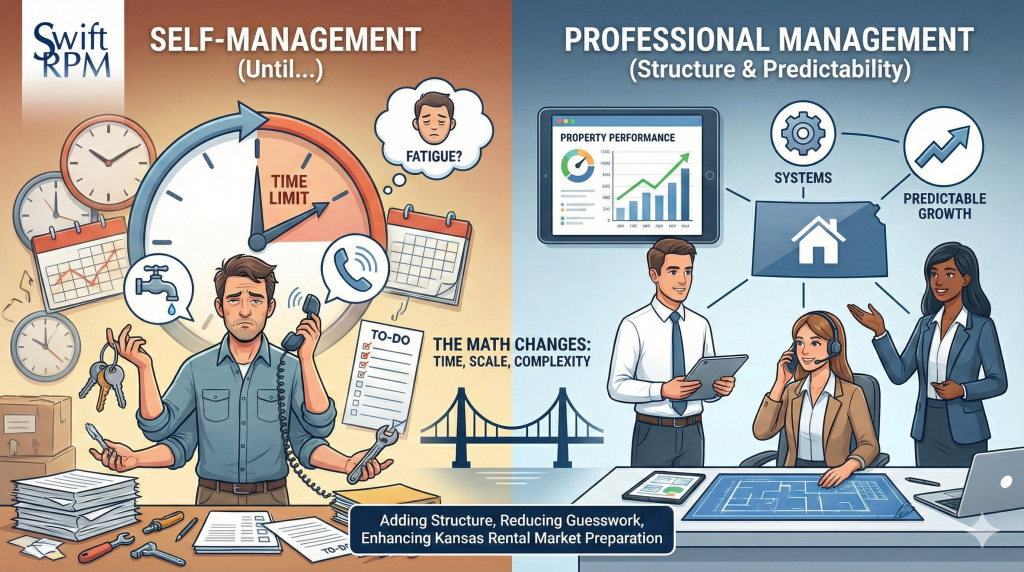
Self-managing a rental property can work very well. Often for years.
But there is usually a point where time constraints, scale, or complexity start to outweigh the benefits. This shift is subtle. It shows up as fatigue. Or delayed responses. Or a growing sense that managing the property feels heavier than it used to.
Many landlords start exploring professional property management at this stage, not because something failed, but because priorities changed.
When done well, property managers do not remove control. They add structure. They reduce guesswork. And they help make Kansas rental market preparation more predictable year over year.
Planning ahead does not mean locking anything in
Thinking about 2026 now does not require firm decisions.
It simply means identifying pressure points early. Vacancy risk. Maintenance backlog. Lease timing. Legal exposure. Time availability.
Landlords who do this as part of their Kansas landlord planning for 2026 tend to feel less reactive later. The options are broader. The decisions are calmer.
And that tends to show in performance.
Final thought
Strong rental seasons rarely happen by accident.
They usually come from choices made earlier, when there was space to think without urgency. December provides that space, even if it does not feel productive in the moment.
If part of that thinking includes whether added support would help, we are always open to that conversation. At Swift RPM, we work with Kansas landlords who want fewer surprises, clearer systems, and more predictable outcomes, without giving up control of their investments.
If it makes sense to explore that together, we would be glad to talk.
FAQs
1. When should Kansas landlords start preparing for the next rental season?
A: Ideally in late fall or early winter, when there is time to review performance and make adjustments without pressure.
2. Is vacancy really more important than rent increases?
A: Often, yes. Even short vacancies can offset the benefits of higher rent, especially once turnover costs are factored in.
3. How often should landlords review maintenance strategies?
A: At least once a year. Patterns become easier to spot when reviewed together rather than issue by issue.
4. Do tenant experience improvements actually affect long-term performance?
A: They often do. Better communication and faster resolutions tend to reduce turnover and vacancy.
5. When does working with a property manager usually make sense?
A: Typically when time, scale, or complexity starts to outweigh the benefits of self-managing, not because something went wrong.